
BIM outsourcing vs an in-house BIM department - costs, risk and ROI for design offices
Should you build an in-house BIM department or outsource modelling and coordination? Real numbers: salary ranges, software licence pricing, training costs and realistic ROI scenarios for design offices.
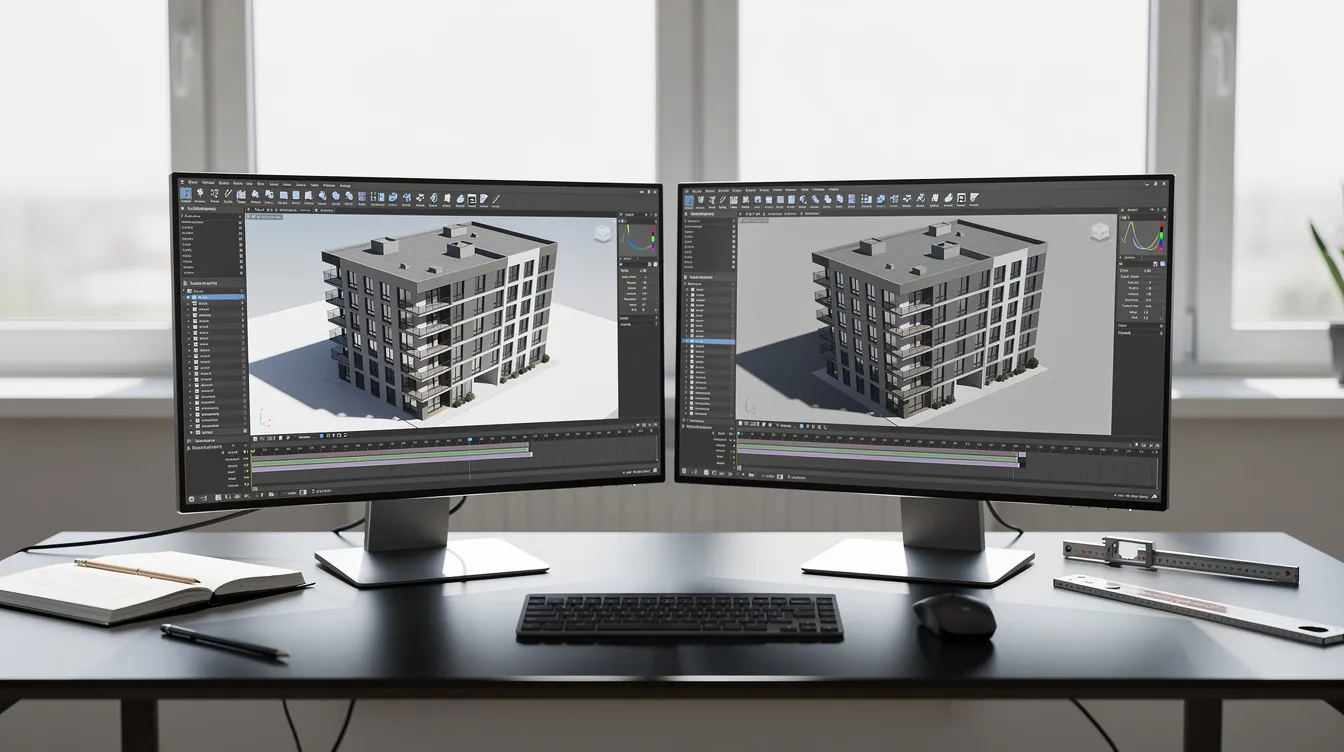
Why BIM outsourcing is an urgent question in 2026
Wage pressure on BIM specialists is rising faster than the market average. B2B rates for a BIM Manager reach PLN 90-140 net per hour, and over 54% of companies surveyed in a government report see BIM implementation costs as a barrier to entry. At the same time, tenders - domestic and from the UK, Germany and Scandinavia - increasingly require ISO 19650 compliant BIM models and multidisciplinary coordination.
Slefty works as an external BIM department for architectural practices, MEP firms and contractors - delivering models, coordination and documentation without the client needing licences or in-house BIM competences.
Key questions we answer:
- What does it really cost to hire a BIM Modeler, Coordinator and Manager?
- What are the BIM software licence and hardware costs?
- Where do training, implementation and productivity-loss costs hide?
- In which scenarios does BIM outsourcing deliver a better return?
- How do you build a hybrid model that minimises risk?
Why design offices need BIM (but not necessarily their own department)
This is not about definitions - it is about business consequences. Situations where missing BIM competence means lost contracts and margin:
- BIM in tender documents - more and more public tenders require LOD 300-400 models and a BEP responding to the EIR.
- Foreign contracts - UK and German partners require models compliant with ISO 19650.
- Multidisciplinary coordination - without BIM models, early clash detection is impossible.
- Facility management - investors expect a model for operating the building after handover.
Structure and cost of an in-house BIM department (2026)
A minimum BIM team for a 15-40 person office is three roles: BIM Modeler (1-2 people), BIM Coordinator (1) and BIM Manager (1). Indicative gross salaries in Warsaw, Wroclaw and Krakow:
Costs the salary ranges do not show:
- Recruitment - agency fees, HR and leadership time for interviews and skills tests.
- Onboarding - seniors lose 10-20% of their time for the first 3-6 months; training is PLN 2,000-5,000 per person.
- Fixed costs - social contributions, holidays, sick leave, office space.
- Idle time - when there are no BIM projects, the department is pure cost.
A sample annual budget for a 3-person team (modeler 6,500, coordinator 10,000, manager 14,000 gross) is around PLN 30,500/month. With contributions, office and hardware (20-30% overhead) that is PLN 40-42k monthly, roughly PLN 480-500k per year - before licences and training.
BIM software licences and hardware (no sugar-coating)
- Autodesk Revit - around PLN 14,693 gross for a single annual subscription.
- Autodesk AEC Collection (Revit, AutoCAD, Civil 3D and more) - around PLN 18,355 per year.
- AutoCAD full version - around PLN 10,037/year; AutoCAD LT - around PLN 2,510/year.
- Archicad - perpetual licence around PLN 20,000.
- Annual technical support - 10% to 20% of the licence value.
Hardware: a capable BIM workstation (min. 32 GB RAM, RTX-class GPU, fast SSD) costs PLN 5,000-7,000 per seat. For three seats that is PLN 15,000-21,000 up front, plus replacement every 3-4 years.
Add visualisation tools (Lumion, Enscape, V-Ray) and project management software - another few thousand zloty a year. A subscription hits the budget even in months without projects.
Hidden costs: training, implementation, productivity loss
- Basic training - a level 1 and 2 Revit course (32 h) costs PLN 899-1,399 per person; ISO 19650 certification adds several thousand more.
- Office standards - BEP, family libraries, Revit templates, CDE configuration: up to PLN 10,000 with consultancy support.
- Productivity loss - new users work 30-50% slower for 6-12 months; parallel 2D + BIM production means unbilled hours.
- Idle time between projects - salaries, subscriptions and depreciation continue regardless.
BIM outsourcing - how it works in practice
BIM outsourcing means renting an external BIM department - hourly or per project. The partner owns the licences, hardware, libraries and experience, so the client carries no implementation cost.
- The client hands over documentation - 2D drawings, point cloud (if any), information requirements.
- We define the model scope together: architecture, structure, MEP, LOD and deadlines.
- The outsourcer delivers modelling, clash coordination and documentation output.
- Billing per project or per hour - a large fixed cost becomes a variable one.
A good partner proposes the methodology and data exchange process (IFC, BCF) from day one, working in Revit, Archicad or other tools - with no need to change the client's environment.
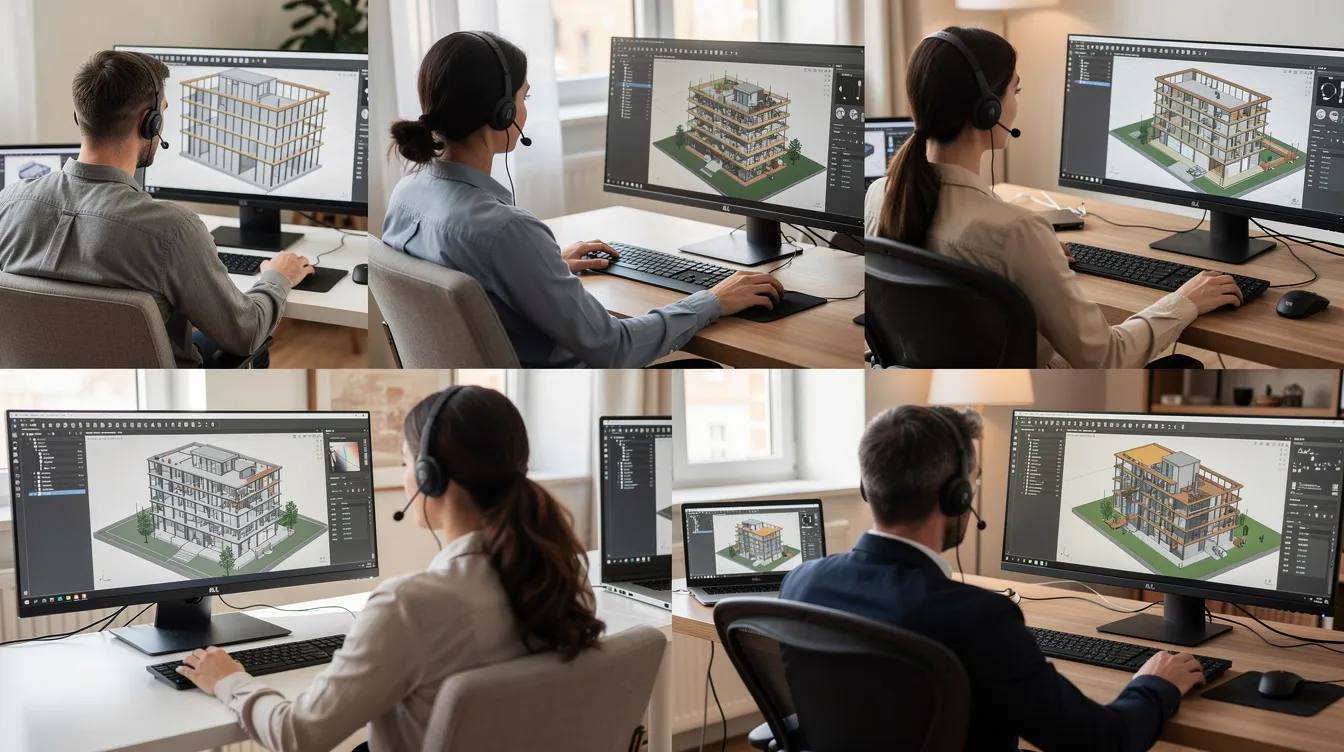
Financial benefits: concrete numbers and scenarios
Small office (5-10 people), 1-2 BIM projects a year
In-house: ~PLN 360,000 salaries + 80-100k licences + 20-30k training = PLN 450-500k a year. Outsourcing: PLN 50-150k per project, i.e. 100-250k a year. Difference: PLN 200-300k saved.
Mid-sized office (30-40 people), 4-6 large projects
In-house (4 FTEs + licences + implementation): PLN 600-700k a year. Outsourcing with a clearly defined scope: PLN 400-550k. Smaller saving, but you keep capital free and remove idle-time risk.
Outsourcing turns fixed costs into variable ones - no CAPEX on licences or hardware, payment on milestone delivery. Add opportunity cost: an in-house BIM manager spends 10-20% of their time on training and recruitment instead of winning contracts.
Operational benefits: flexibility, scaling, expert access
- Flexible scale - more modelers within days, with no recruitment.
- Cross-sector experience - industry, retail, logistics, hotels, high-density services.
- No ramp-up - ready libraries, standards and practices from day one.
- Work across technologies - Revit, Archicad, Vectorworks, IFC.
- Relief for your team - architects focus on design and quality.
Risks and downsides of both approaches: an honest comparison
Risks of an in-house BIM department
- Dependence on 1-2 key people - losing a senior means losing know-how and standards.
- Hard to maintain competence with a low project count.
- Wage pressure - BIM salaries rise year on year.
- A significant share of the time is unbilled: training, rework, parallel 2D + BIM production.
Risks of BIM outsourcing
- The scope must be precisely defined - without a BEP and EIR, misunderstandings around LOD and disciplines appear.
- Choosing a partner without experience in your sector.
- Timeliness - outsourcer delays affect your whole schedule.
- Communication - language or procedural barriers in model exchange.
How to mitigate: NDA, a pilot on 1-2 smaller projects, clear KPIs, standardised data exchange (IFC, BCF, CDE), regular check-ins and one coordinating person on the client side.
When to build in-house and when to outsource
An in-house BIM department makes sense when:
- You run at least 4-5 concurrent contracts a year requiring full BIM models.
- Your strategy is to build internal know-how and ISO 19650 standards.
- The company has 80+ people and a mature CDE with established processes.
- Model quality must be controlled in real time.
BIM outsourcing is the better choice when:
- The office has 5-40 people and irregular BIM demand.
- You need to answer a BIM tender quickly - without 2-3 years of implementation.
- You need scalability and on-demand resources.
- The investor cares about the result (model, documentation), not how it was produced.
The key difference: in-house is CAPEX (hardware, licences, training). Outsourcing is OPEX - a variable cost that does not freeze your liquidity.
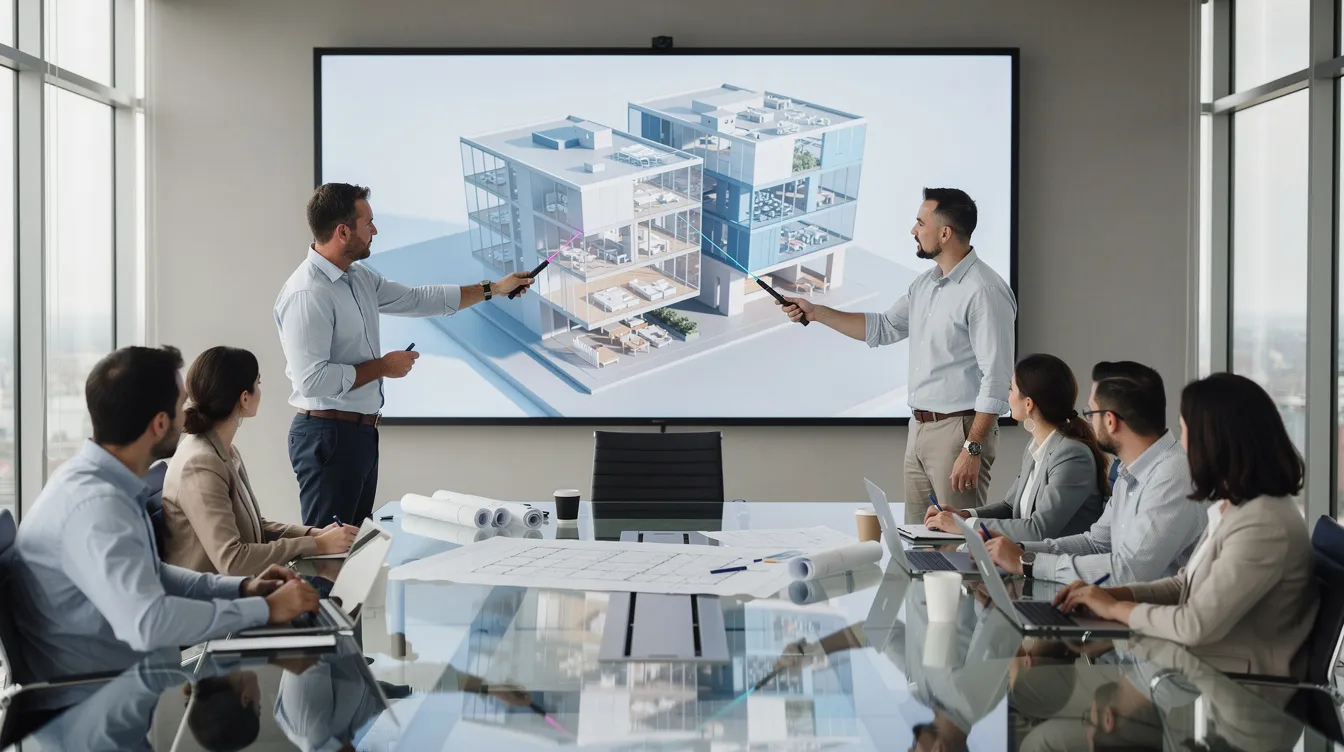
The hybrid model: small in-house competence + outsourcing
- 1 person in-house - a BIM coordinator owning standards, investor contact and quality control.
- An external partner delivers modelling, updates, clash coordination and reports - per project or hourly.
- Gradual know-how build-up - the office learns BIM on real projects without the full cost of a department.
- Supporting tools - model sharing in Revit and a web viewer (Conpass by Slefty - the client reviews models without a licence).
- Interoperability via IFC/BCF, with a CDE as the central data repository.
The hybrid model is a safe step into digitalisation - it lets you test, build competence and outsource where it delivers the highest efficiency.
Summary: which BIM strategy maximises your ROI
An in-house BIM department is a PLN 480-700k annual investment for a small-to-mid office, paying off at scale with steady project volume. BIM outsourcing is a flexible variable cost, lower risk and fast entry into ISO 19650 projects - without freezing hundreds of thousands in salaries and licences.
Concrete recommendations:
- Calculate the annual cost of salaries, software, hardware and training - compare it with outsourcing quotes for 1-2 pilot projects.
- Consider the hybrid model as a first step: 1 in-house BIM coordinator + an external partner for model production.
- Define scope, LOD, data exchange formats and KPIs before you start - that removes most of the risk.
- Remember cashflow: outsourcing swaps CAPEX for OPEX and protects liquidity.
Let's run the numbers for your office
We'll prepare a cost comparison of an in-house department versus outsourcing based on your real project pipeline.