
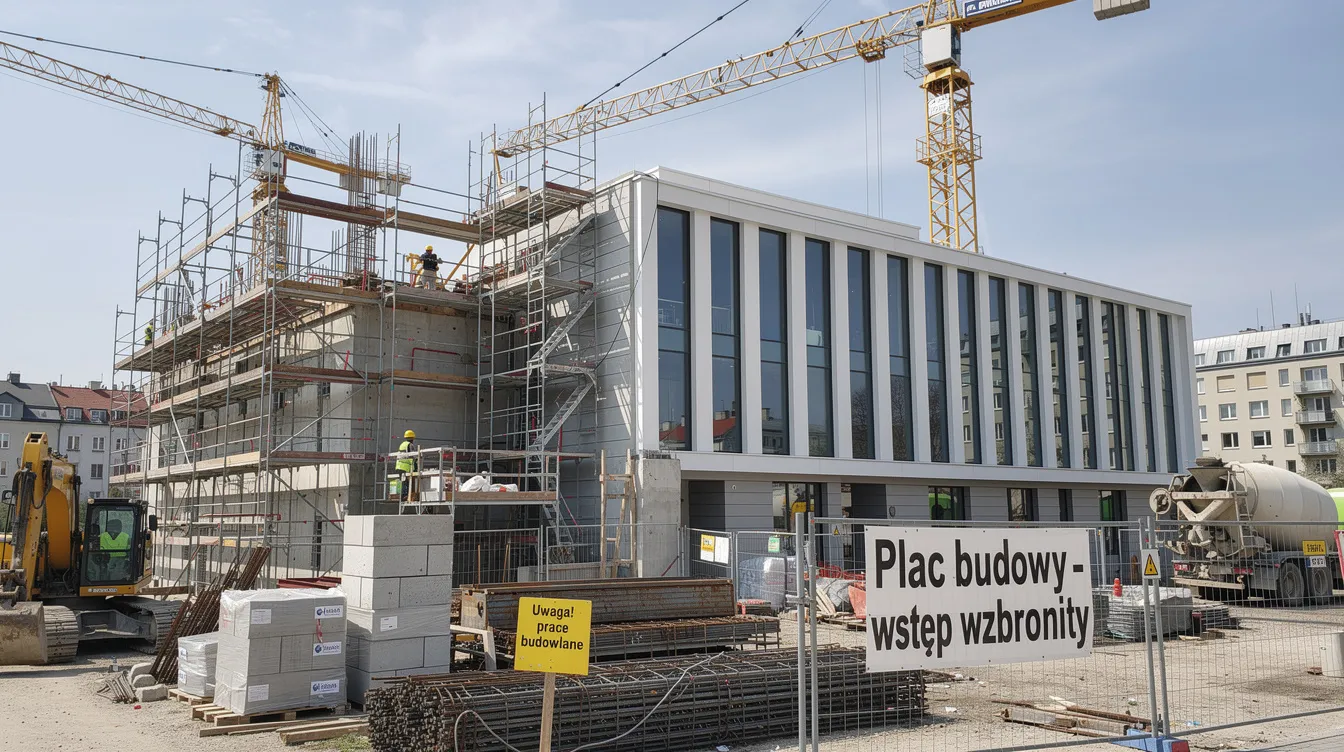
BIM in public procurement in Poland - the BIM mandate, roadmap and practical consequences
Public tenders with a BIM requirement are no longer a question of 'if' but 'when'. Here is what applies today, what is coming, and what you need to do to stay in the game.
Key takeaways
In 2026 BIM in Polish public procurement is still formally voluntary, but in practice it has become the entry ticket to large tenders. The key facts:
- The Public Procurement Law (Art. 69(4)) allows contracting authorities to require specific electronic tools, including building information electronic modelling - and more of them do so every year.
- The Ministry of Development roadmap assumes a BIM requirement for contracts above EUR 410 million by 2025, and mandatory BIM for all contracts by 2030. The SMART report calls for mandatory BIM Level 2 from 2026.
- BIM Standard PL (2020, aligned with ISO 19650, positively reviewed by the Public Procurement Office) acts as the de facto reference standard in tenders.
- 41% of architects in Poland already work in BIM, but a lack of BIM capability limits access to a growing pool of public contracts.
- Poland is one of the last EU countries without a formal BIM mandate - gradual adoption starts with you, not with legislation.
Why BIM in public procurement matters right now
Public procurement is the state's main tool for delivering infrastructure - hospitals, roads, schools, industrial facilities. The Ministry of Development has long treated BIM methodologies as a way to spend public money more efficiently. BIM turns the traditional delivery approach into a digital process where errors are found before site works start, not during them.
Real problems of traditional public construction:
- Budget overruns of 20-30% - because manual take-offs ignore cross-discipline clashes.
- Delays of up to 40% - because coordination happens on paper, not in the model.
- Rising operating costs after handover - because there is no digital as-built documentation.
From the state's perspective BIM serves three concrete functions: cost control (accurate take-offs and simulations), time control (4D scheduling - linking the model with the construction programme to monitor progress) and asset management after the contract ends, where the BIM model becomes a digital twin. BIM affects the whole investment lifecycle and enables energy performance and lifecycle cost analysis.
BIM has appeared in Polish public tenders since 2014. Key contracts today - hospitals, universities, major roads - already carry BIM requirements in their specifications. For contractors and design offices, BIM is becoming the entry ticket to large public projects.
Legal basis - the PPL and Directive 2014/24/EU
The specific articles and dates - no lengthy commentary.
Directive 2014/24/EU (Art. 22(4))
- Allows member states to require the use of specific electronic tools, including building information electronic modelling, in works contracts and design contests.
- Obliges contracting authorities to offer alternative means of access to BIM tools until they are generally available.
Public Procurement Law (Art. 69(4))
- Explicitly allows requiring building information electronic modelling tools in works contracts and design contests.
- The Public Procurement Office confirms in official interpretations that 'building information electronic modelling tools' means BIM - removing doubts for contracting authorities.
The rules allow not only requiring the ability to read BIM documentation, but running the entire design and delivery process in BIM - provided requirements are properly described in the tender documents / EIR.
The BIM mandate - what it is, and Poland versus Europe
A BIM mandate is a statutory or governmental obligation to use BIM in defined categories of public contracts. It takes different forms across countries - from a hard requirement to gradual rollout with value thresholds.
- It is the final stage of a national BIM strategy - after pilots, recommendations and voluntary use.
- Public contracts may be awarded only to organisations meeting BIM requirements (skills, software, processes).
Comparison with Europe
| Country | BIM mandate status | Key fact |
|---|---|---|
| United Kingdom | BIM Level 2 mandatory since 2016 | Reported savings of ~20% of capital cost |
| Germany, Spain, Italy | Mandatory BIM for selected categories since 2017/2018 | Scope keeps expanding |
| Nordic countries | BIM as market standard for over a decade | De facto market obligation |
| Poland | No formal mandate | Government schedule heading towards mandatory BIM |
Poland has no formal BIM mandate yet - but there is a roadmap towards one, and contracting authorities already add BIM requirements themselves. Mandates abroad directly affect Polish contractors bidding internationally: without BIM capability and standard compliance (COBie, IFC) you are eliminated.
The BIM roadmap and digitalisation of construction in Poland
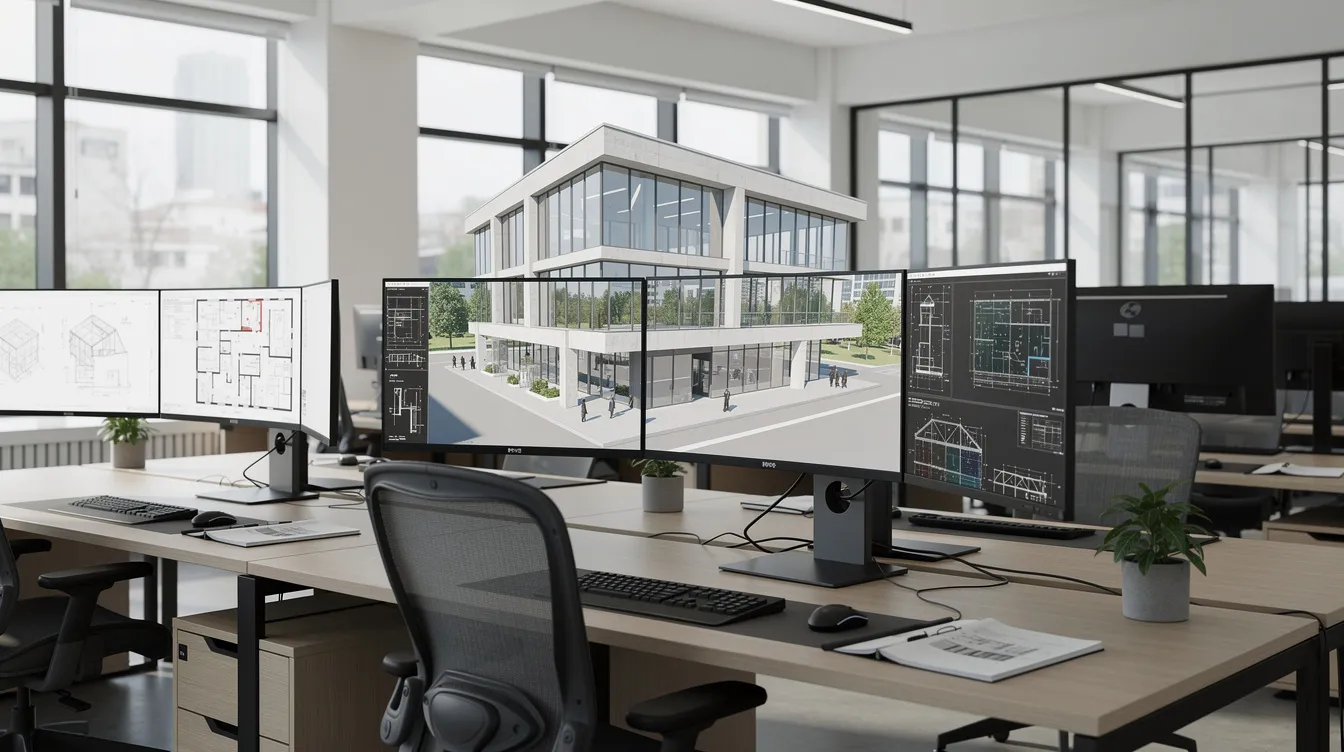
Roadmap for implementing BIM methodology in public procurement
- Developed under the 'Digitalisation of the construction process in Poland' project, delivered by 2020 with the Ministry of Development, PwC, BIM Klaster and the DZP law firm.
- Its main goal was to plan phased BIM adoption in public construction procurement.
- The BIM implementation roadmap was published in 2020.
Framework deadlines from the roadmap
The 'Digitalisation of the construction process' project covered electronic circulation of construction documents (e-applications, e-site diary), integration with surveying data and groundwork for wider BIM use. BIM in Poland remains largely voluntary, but its use keeps growing.
In March 2022 a BIM working group was set up at the Ministry of Development and Technology to develop detailed BIM standards, update the roadmap and issue recommendations for public procurement. Industry organisations take part - PIIB, regional chambers and BIM associations. The roadmap is part of a wider digitalisation programme (qualified e-signatures, trusted profile, digital project document repositories).
BIM Standard PL and information standards in public procurement
BIM Standard PL is a practical document defining how building projects are delivered in BIM - and the key Polish reference standard in public tenders with BIM.
- BIM Standard PL was published in July 2020 and is aligned with ISO 19650.
- Scope: responsibility split, information structure, model detail levels (LOD/LOI), rules for working in a CDE.
- Prepared by the industry (PZPB, PZITB, SARP, Budimex, Warbud, Skanska, PORR and others) and positively reviewed by the Public Procurement Office.
Contracting authorities increasingly reference BIM Standard PL in their specifications, and contractors and designers use it as the basis for their own procedures. It maps to PN-EN ISO 19650 (information management across the asset lifecycle) and consistent exchange formats (IFC).
Documents already appearing in public BIM tenders: EIR (Exchange Information Requirements), BEP (BIM Execution Plan), TIDP/MIDP (information delivery plans). Companies preparing to bid should build their own templates aligned with BIM Standard PL - it cuts response time when a tender is published.
The role of industry bodies and public institutions
BIM in public procurement is not only a matter of regulation - it results from the work of specific institutions.
PIIB
Adopted a BIM implementation strategy in February 2020. In September 2020 it created a BIM Committee with representatives of almost all regional chambers, working on construction digitalisation together with the national building supervision office.
Ministry of Development and Technology
Coordinates the national BIM strategy. The Department of Architecture, Construction and Geodesy leads the BIM work.
Public Procurement Office
Reviews standards (e.g. BIM Standard PL) and issues interpretations for contracting authorities on how to phrase BIM requirements in line with the Public Procurement Law.
Supporting organisations
BIM Klaster, the BIM Association for Polish Construction, the ECCBIM Foundation, the V4 BIM Task Group - promoting good practice, training and international exchange. The European Commission (DG Reform) supported the digitalisation project.
Real public contracts with a BIM requirement
BIM in public procurement is not theory. What is happening on the market:
41% of architects in Poland already work in BIM - the trend is upward, though a gap between private and public sectors remains. Many authorities use a 'push-pull' approach: some require BIM outright, others award points for it in bid evaluation, which forces BIM capability anyway. BIM improves cost predictability and quality control.
The number of BIM tenders grows year on year - typically high-value contracts that matter for a contractor's track record.
What it means for design offices and contractors
Concrete effects - real impact on your revenue and risk, not generalities.
Business consequences
- No BIM capability means gradual exclusion from tenders above certain thresholds - and eventually from most public works contracts.
- Companies that adopt BIM earlier build a reference portfolio before a hard mandate arrives - a measurable advantage when experience is scored.
Organisational consequences
- Moving from 2D/CAD to BIM models (Revit, Tekla, Archicad). Every subcontractor in the chain must exchange data in IFC.
- Building internal standards (naming, templates, family libraries) aligned with EIR and BIM Standard PL.
- Changing collaboration processes - working in a CDE and exchanging IFC models.
Hard numbers
Earlier clash detection means fewer reworks and lower contractual penalties. For company leadership BIM is not just training and licence cost - it is an investment in margin control.
How to prepare your company for the coming BIM mandate

To be ready for the growing number of BIM tenders you need an implementation concept, not just a Revit licence.
- 1Assess where you are - past projects, team skills, software, participation in public tenders.
- 2Choose software and tools - Revit as the dominant authoring tool, a browser-based model viewer (e.g. Conpass), a CDE matching client requirements.
- 3Train the team - short, intensive cycles based on real tender documentation.
- 4Configure the working environment - templates, libraries, naming standards aligned with BIM Standard PL and ISO 19650.
- 5Run a pilot project - ideally a smaller public investment or a private commission, to test processes before bidding on large tenders.
BIM implementation in a small or medium office typically takes 2 to 4 months - it should not be postponed until BIM becomes a condition of contract delivery.
Preparing BIM management documentation matters: your own BEP templates, quality procedures (model checking, naming, versioning) and collaboration rules with partners. Many firms use external expert support on their first projects - outsourcing then works as an 'external BIM department', letting you start without building full in-house capability from day one.
FAQ
Is BIM mandatory in Polish public procurement in 2026?
Formally there is no general BIM obligation in 2026. The Public Procurement Law (Art. 69(4)) lets authorities require building information electronic modelling tools, and the number of such tenders is growing. BIM is not yet formally mandatory, but it is becoming a market standard. The SMART report calls for mandatory BIM Level 2 from 2026.
When will BIM become genuinely mandatory in all public tenders?
The Ministry of Development roadmap assumes a BIM requirement in public projects above EUR 410 million by 2025 and general adoption by around 2030. Industry reports (SMART) suggest accelerating BIM Level 2, but the final shape depends on legislative decisions. Rollout will be phased.
What is a BIM mandate, and is there a single one for Poland?
A BIM mandate is a government policy requiring BIM in defined public contracts. Poland has no single overarching act of this kind yet - there is a roadmap, ministerial strategies and the powers authorities hold under the Public Procurement Law. Poland is one of the last EU countries without a formal mandate, but the direction is clear.
Does a small design office need to invest in BIM now if it only bids for smaller tenders?
In the short term some smaller procedures still run without BIM. But the trend and the roadmap are unambiguous - BIM tenders keep growing and implementation takes months. 41% of architects in Poland already work in BIM; those who wait lose time building references. Start with a small pilot.
Which BIM documents appear most often in public tender specifications?
Authorities increasingly require delivery in line with an EIR (Exchange Information Requirements), a BEP (BIM Execution Plan), a structure compliant with BIM Standard PL and PN-EN ISO 19650, and models in open formats such as IFC. Preparing these documents in advance gives you an edge in every BIM tender.
Bidding for a tender with BIM requirements?
Send us the tender documents or EIR - we will review the BIM requirements, assess your team's readiness and propose a scope of support as your external BIM department.